From the Deserts of Iraq to the Halls of Montezuma

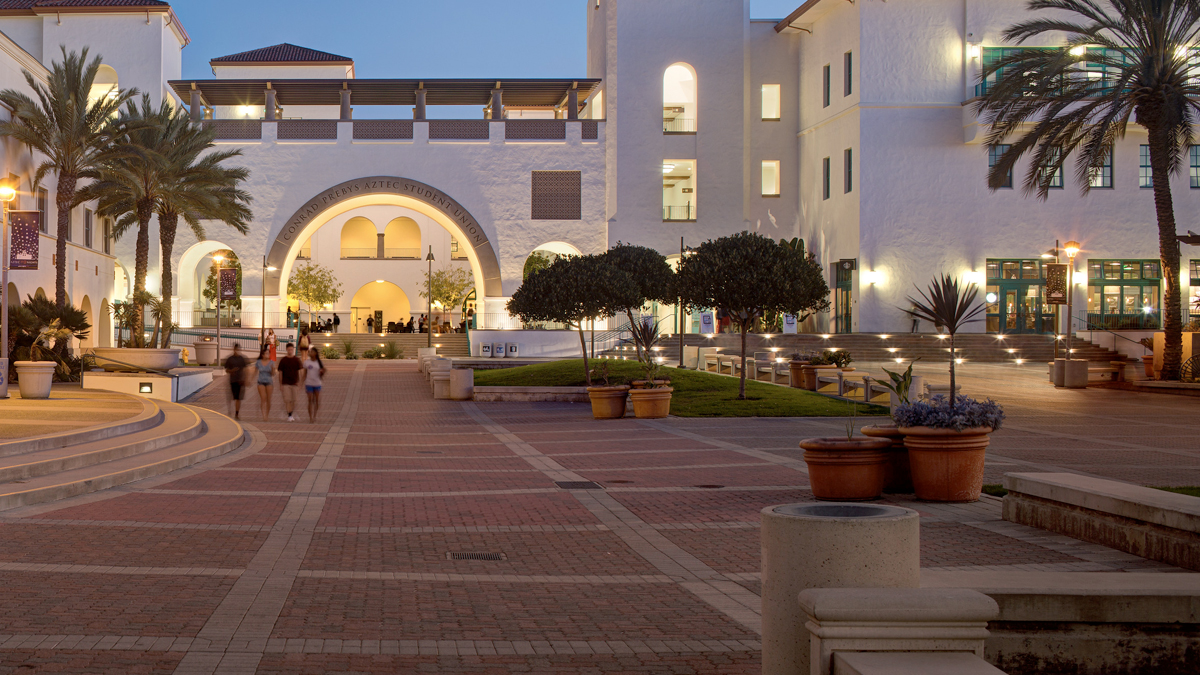
The initial wave of first-year students and their parents arrived before the sun’s rays reached Montezuma Mesa. Student Ambassadors and housing officials greeted them, providing check-in directions. They crammed into elevators and trudged up stairways, stuffed suitcases in hand and duffel bags strapped to their backs, pausing occasionally to scan the signs.

“It’s exactly the type of normal college experience I really wanted,” said Paul Volpe, 21, whose background is anything but typical for a beginning college student. “I want to experience it all. I don’t want to miss out on anything just because I didn’t go (to college) directly out of high school.”

Paul Volpe
Paul Volpe

Volpe veered off the traditional college track midway through his senior year at Glen Rock High School, named for his New Jersey hometown of 13,000 residents.

In step with many of his friends, the honor student and three sport letterman had applied and been accepted to several universities. Unlike his friends, he eschewed the straight-to-college experience offered by UMass, UConn and Temple and, instead, chose the Marine Corps and certain deployment to Iraq or Afghanistan.

Volpe can’t fully explain why he walked into the Marine recruiter’s office that fateful spring day in 2003. “I wanted to do something different,” he said. The Marines obliged him.

Thirteen weeks of basic training in Parris Island, SC. Eight weeks of infantry training at Camp Geiger in Jacksonville, NC. Ten weeks of combat readiness with his assigned platoon at Camp Lejeune, also in Jacksonville. And then his first deployment – to Iraq.

Back to school

After more than two grueling years as a Marine, Volpe reclaimed a civilian life and decided to apply to college. His application to SDSU was among 52,000 competing for 9,000 spots. If those odds weren’t tough enough, he was in the ultra-competitive out-of-state group.

Predictably, he was denied admittance. But Sandra Cook, enrollment services director, e-mailed Volpe, encouraging him to appeal based on SDSU’s policy of special consideration for active duty military and veterans. Upon Volpe’s appeal, the original decision was overturned, and SDSU President Stephen L. Weber sent him a personal letter of acceptance.

This fall, Volpe is one of about 600 veterans attending San Diego State, according to Joan Putnam, SDSU’s Veterans Affairs coordinator.

“That number is going to explode as we get a huge tidal wave of students coming back from Iraq and Afghanistan,” Putnam said.

“We need to make sure we are prepared to handle the needs of these veterans, as some of them will struggle adapting to university life. Our goal is to give them the resources to stay in school and graduate.”

The current influx of vets recalls the post-WWII era of booming enrollment at colleges nationwide. San Diego State’s student population rose from 860 in 1943 to 4,376 in 1947, and nearly half the students were veterans. Temporary buildings were erected; seasoned faculty had to share offices, and even desks, with new colleagues.

The road to Iraq

Today, vets returning from Iraq and Afghanistan will likely find the mental adjustment more difficult than the physical. Though Volpe is convinced of his ability to adapt to life on campus, he acknowledged that his life experience is entirely different from other students.

Victor Ozuna and fellow soliders in Iraq
Victor Ozuna and fellow soldiers in Iraq

After his enlistment, while high school friends moved into dorms, began taking college classes and started to manage life on their own, Volpe moved into barracks, began punishing physical training and had drill instructors directing his every move.

He endured the rigors more easily than others, thanks to his athleticism, but “the mental adjustment was brutal,” he recalled.

“It was more than having people yell in your face,” he said. “The toughest part was not seeing family and not knowing anybody or having time to make friends.” After only eight months of training, Volpe was deployed to Iraq.

This is war

“We would have liked more training, but they needed us immediately, and it just wasn’t possible,” Volpe said. “So they taught us over there. When we weren’t on missions, we were in classes. That’s how it went every day in Iraq. We were tired as hell.”

Superiors took immediate notice of Pvt. Volpe’s goal-oriented determination and cunning bravado – traits that landed him point-man status on a battalion-record 14 night raids. He was the first through the door to homes and other buildings suspected of harboring illegal arms and bombmaking materials.

Victor Ozuna in Iraq

“It was surreal and it was intense,” said Volpe, explaining that a good Marine can’t dwell on mortality. “I never thought about getting hurt or worse. If you are constantly thinking about getting killed, then you are not focused and you won’t make it.”

Volpe almost didn’t make it. On Nov. 9, 2004 – not long before his second deployment was to end – his platoon took part in Operation Phantom Fury, a joint U.S.-Iraqi offensive against rebel strongholds in Fallujah. The U.S. military called it some of the heaviest urban combat faced by Marines and Army infantry soldiers since Vietnam.

Volpe and his platoon were ambushed during a medical evacuation operation. He was hit three times – in the arm, calf and thigh – with AK-47 rounds. He nearly died on the battlefield, but doctors stabilized him long enough to get him to a hospital for further treatment.

Airlifted to Germany, he began a lengthy, painful recovery. Later, in Bethesda Naval Hospital, where he continued to convalesce, he received a bedside visit from President George W. Bush and was awarded the Purple Heart.

Volpe left Bethesda in early December, three weeks after he was wounded. But the doctors had missed a shard of steel in his thigh. With every step, biting pain shot through his sciatic nerve. He returned to the naval hospital; then, finally, home.

Volpe left the corps last fall with a permanent disability. Despite his harrowing experience, he doesn’t regret a moment. “As crazy as it sounds, I would do it all over again.”

From soldier to student

Paul Volpe
Paul Volpe

Throughout his deployment, there was never any doubt in Volpe’s mind that he would eventually earn a college education. He’s not sure why he chose San Diego State, clear across the country from his East Coast roots; but having been accepted, Volpe focused his attention on becoming a student.

He chose to live in University Towers and arranged to receive the vocational rehabilitation benefit provided by the U.S. government to service-disabled veterans. It covers books and tuition.

By the first day of classes, Volpe was eager to start, and anticipating a smooth transition to college life.

“I have gone into the Marine Corps, where I didn’t know anybody and they put me in the most stressful situations,” he said. “I am confident, with what I have gone through, I can overcome whatever comes my way.

“I imagine there will be some times where I may not see eye to eye with someone who is 18 and just out of high school,” Volpe said. “But I am sure it will be minor and I am also sure things will work out just fine.”

Most student veterans don’t experience major transitional issues, so Volpe’s optimistic outlook is not unwarranted, said SDSU’s Putnam. However, she has helped several students who exuded confidence only to be dealt a harsh dose of reality.

Victor Ozuna, 25, is one example. He served in Iraq on an elite Navy engineering and reconnaissance team and was among the first U.S. military personnel to cross into Iraq. An Imperial Valley native, Ozuna enrolled at SDSU just weeks after leaving the Navy in 2003.

“I came back knowing I could handle anything, but I was wrong,” Ozuna said. “There were so many things that changed so quickly. I had seen so much destruction and so much death. I couldn’t relate to the students – all those happy people on campus who had no idea what was happening in Iraq.”

Ozuna felt confused and isolated. “I drank alone in my room at night,” he said. “I knew things weren’t right. Thankfully I found people who could help.”

Advantaging the vet

Ozuna turned to Putnam and to SDSU professor Ken Walsh, who has played a significant role sharpening Ozuna’s academic focus in construction engineering. Off campus, he found Michael Kilmer, a counselor at San Diego’s Veterans Administration Hospital.

Victor is a huge success story, he is a perfect example of what combat veterans can achieve as students.

— SDSU Veterans Affairs coordinator
Joan Putnam

Ozuna joined Kilmer’s weekly support sessions for combat veterans in college, the only such service in the nation operated by the VA. The group tackles a wide range of issues, including disability services, VA benefits and healthcare, study skills, stress/anxiety management and advocacy.

“For a veteran, leaving the military and losing that support community, the income and the camaraderie for the life of a starving student is not enjoyable,” Kilmer said. “Many of the veterans are the first in their families to go to college and they come from different socioeconomic backgrounds than most of their university peers.”

Their war experiences exacerbate the differences.

“Most people may not realize how difficult taking a class can be for a combat vet,” Kilmer said. “They don’t want people sitting behind them; loud noises can be particularly jarring.”

Ozuna credited Kilmer’s group with easing his integration into student and civilian life. He is expected to graduate with honors in the spring as part of the first class from the new J.R. Filanc Construction Engineering and Management program at SDSU.

“Victor is a huge success story,” Putnam said. “He is a perfect example of what combat veterans can achieve as students.”

Victor Ozuna
Victor Ozuna at the SDSU War Memorial

As Veterans Affairs coordinator, Putnam is part of a campus committee to identify and implement veteran-friendly policies. Other committee members represent Student Disability Services, Enrollment Services, Student Recruitment, Counseling and Psychological Services and others.

The group is SDSU’s response to a California State University system directive charging campuses to guide students through the bureaucratic maze of applying for veterans’ benefits and provide on-site mentoring and counseling.

“We have experts from across campus coming together to develop as many ways as possible to advantage the vet,” Putnam said.

As Volpe navigates his first semester at SDSU, and, perhaps, hits some of the brick walls that frustrated Ozuna, he is grateful for the safety net that Putnam and her staff have assembled.

“I am not looking for special treatment, but it’s good to know the support is there to help me achieve my goals,” Volpe said. “I want a fun experience. I want a degree in four years. I could have done it when I graduated high school, but I chose a different path. Now it’s time for me to get a good education, a valuable degree and a good job.”

Related information

Credits

SDSU Marketing & Communications
Division of University Advancement
San Diego State University
5500 Campanile Drive
San Diego, CA 92182-8080
(619) 594-1476